Mortgage rate  6.76% | Med. list price  $431,250 | # of listings 31.6% | Time on market 50 days |
| Average weekly 30-year fixed-rate mortgage data from Freddie Mac as of 5/1/2025; median housing data from Realtor.com as 5/1/2025 and 4/26/2025 (the most recent available). | - Mortgage rates dropped week-over-week from 6.81% to 6.76% for a 30-year fixed-rate home loan. A year ago at this time, the number hovered at 7.22%.
- Listing prices inched up 0.5% year-over-year this week, with the nationwide median at $431,250. Prices tend to rise seasonally and peak in June as home-shopping fever heats up.
- The number of homes for sale ballooned by 31.6% year-over-year, notching the 77th straight week of annual gains. Plus, the number of new-to-market listings spiked by 11.2%, so there are plenty of fresh options to consider.
- Homes lingered on the market three more days than they did at this time last year, typically spending 50 days for sale before finding a buyer. The pace of sales has been slowing down for about a year, giving homebuyers more time to consider whether to close the deal.
|
|
|---|
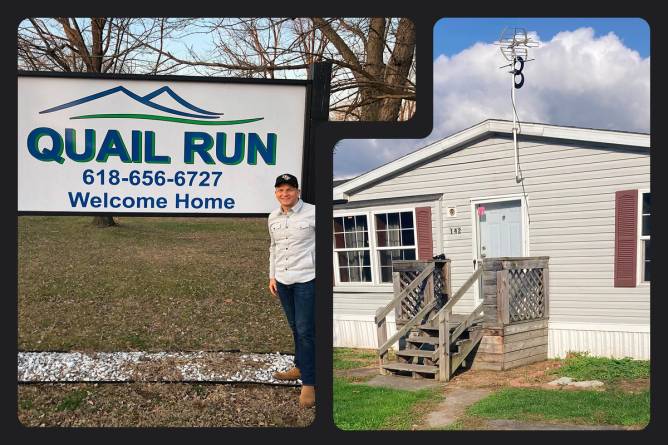
THE BIG STORY When Andrew Keel first laid eyes on the Quail Run Mobile Home Park in Edwardsville, IL, he was so smitten, he moved in—and bought the 67-lot park for $1.34 million. “I found mobile home parks back in 2015 and instantly fell in love with the asset class, primarily due to the higher than average returns and lower than average risk,” he says. Quail Run, which the Keel Team owns to this day, has “been a fantastic investment, netting returns over 70%.” He also enjoyed living there. “I learned so much,” he says. “People think it’s full of crime and slumlords when this is the farthest thing from the truth. Most trailer parks are really affordable housing subdivisions, and most of our residents prefer to live here due to the lower costs versus renting an apartment or owning and maintaining a home.” Mobile homes—also called manufactured homes or trailers—may not seem like a sexy place to put your money, but their phenomenal returns have been turning heads and earning this asset class the reputation of being “recession-resistant.” “They remain stable and resilient, even when the economy takes a hit,” says Gabe Monfried of GMF Group, which owns and operates 4,300 lots and units across 48 communities. “I think the secret is a combination of factors, including long-term stability, lower operating costs, and the ever-growing demand for affordable housing. We started investing in manufactured housing after recognizing it as an undercapitalized and overlooked asset class. Once we took a closer look, the potential was clear.” Mobile homes not only offer an affordable entry point for investors, but also have been increasing in value in part because they’re “the only shrinking real estate asset class in the US,” says Brian Davis, founder of the real estate investment club SparkRental. “Municipalities don’t approve new mobile home parks because they don't produce much property tax income.” Flippers have also been pleasantly surprised by the return on investment of mobile homes. “We flipped our first mobile home by accident because we never realized the tremendous value they can have,” says Ryan David of 607HomeBuyers.com in Clarks Summit, PA. “We nearly declined the offer because we buy houses, not mobile homes. But we decided to roll the dice.” David bought the home for $8,000, spent $4,000 on a “mini-flip” with new floors and a fresh coat of paint, then sold it a week later for $34,000, netting about a $20,000 profit after expenses. “We now look at mobile homes in a totally different light,” he says. “We see so much potential, we started a postcard advertising campaign to five local parks in our area.” How to invest in mobile homes Investing in mobile homes may be a moneymaker, but it also comes with potential pitfalls. The home and the land underneath are typically sold separately, and finding financing can be a challenge. Zoning restrictions mean these homes cannot be plunked down anywhere, and lingering negative perceptions may keep these homes from appealing to a broad swath of buyers. Keel recommends that investors learn the basics before diving in and offers a free guide on mobile home investing to help with things like how to gauge the age and condition of what you’re buying (i.e., a pitched roof means it was built in the 1980s; a flat/round roof means it’s from the 1960s–1970s). Although mobile homes can be found on typical real estate sites like Zillow, Facebook Marketplace tends to have the best deals, Keel says. Mobile homes are typically on the affordable end of the spectrum, but some are much more upscale and glamorous. Fashion designer Betsey Johnson once lived in a pink, floral-printed mobile home in Paradise Cove, a park in Malibu, CA, that boasts tennis courts, a guarded gated entrance, and beach views. She sold it for $1.95 million in 2019. “What might surprise people is how diverse and stable manufactured housing communities are. They’re home to a mix of residents, including working-class families, senior citizens, and essential workers, and many stay for years,” points out Monfried. “Unlike younger renters who often move for school or work, these residents tend to be more rooted,” Monfried adds. “Beyond affordability, these communities offer a sense of connection. With shared spaces, residents have opportunities to build relationships. That atmosphere often leads to higher resident satisfaction than you might find in a typical multifamily building. We love buying and improving these communities. It’s been incredibly fulfilling to see both the financial and social impact of our work.” | | |
|
|
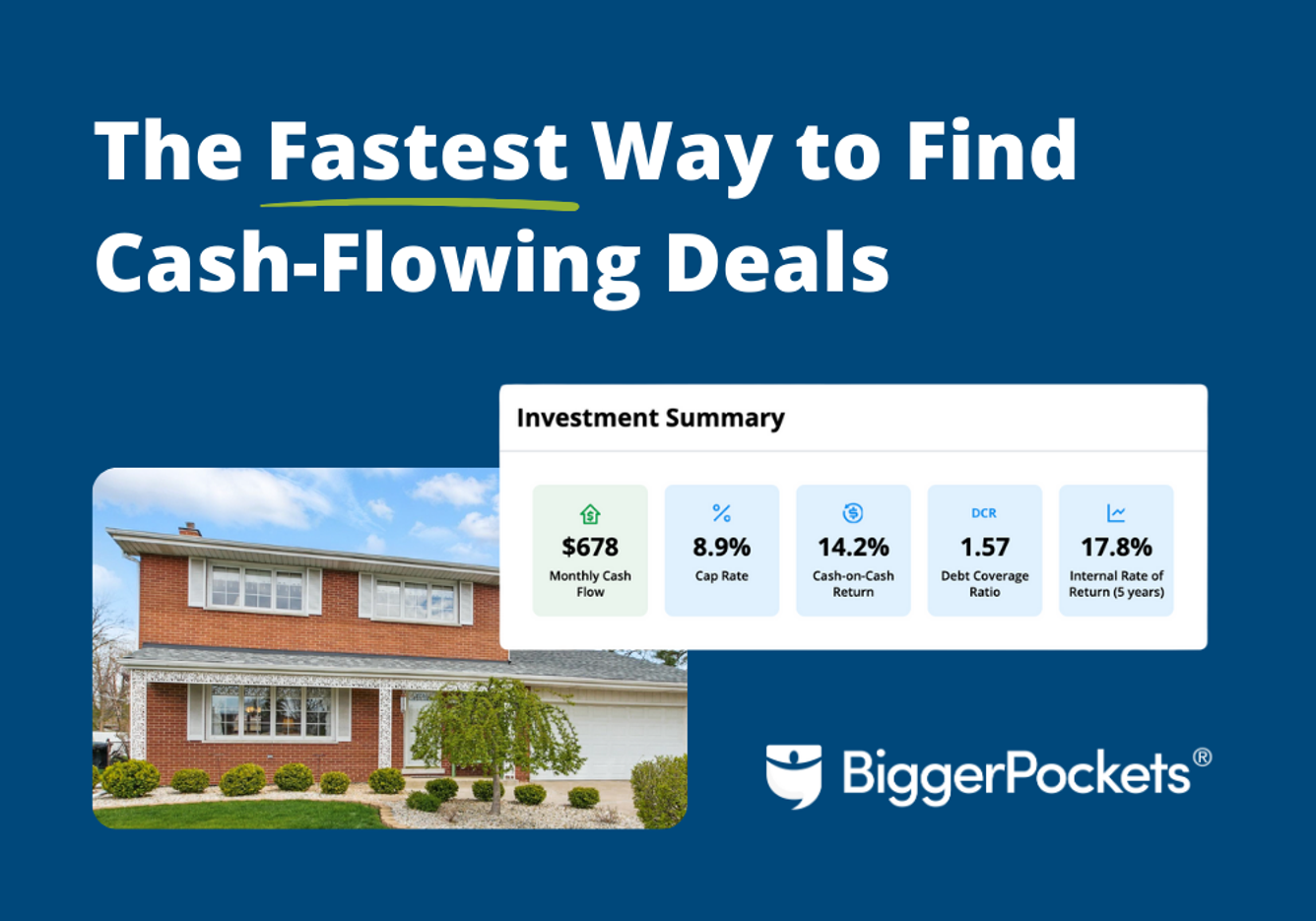
Presented by BiggerPockets One in five real estate investors say that finding deals is their biggest challenge. Hurdles along the way are one thing, but a hurdle at the very first step of the process is bonkers. That’s why the team behind the top real estate investment community, BiggerPockets, created BiggerDeals. This is a powerful new tool designed to help investors find cash-flowing properties quickly—without the spreadsheets. With this tool, you can: - Search active listings nationwide and instantly see deal metrics like monthly cash flow, cap rate, cash-on-cash return, and IRR, without lifting a calculator.
- Adjust assumptions like purchase price, financing terms, income, and expenses so you can see what the deal looks like for you, not just the average investor.
- Stop wasting time doomscrolling on listing sites.
Don’t get left outside in the cold. Check out BiggerDeals. |
|
QUICK HITS  Million-dollar “starter homes” are increasingly the norm. Zillow found that starter homes (defined as being in the bottom third in terms of price) will run you seven figures in 233 towns across the US—up from just 85 municipalities five years ago. That said… Million-dollar “starter homes” are increasingly the norm. Zillow found that starter homes (defined as being in the bottom third in terms of price) will run you seven figures in 233 towns across the US—up from just 85 municipalities five years ago. That said…
 Price cuts are surprisingly common. “Sellers are cutting prices at record rates,” says Zillow senior economist Kara Ng. In fact, over one-third of listings in 10 major cities have undergone decreases over the past year. Phoenix had the most, with 37% of listings advertising reduced prices. Here’s the complete list of cities cutting prices. Price cuts are surprisingly common. “Sellers are cutting prices at record rates,” says Zillow senior economist Kara Ng. In fact, over one-third of listings in 10 major cities have undergone decreases over the past year. Phoenix had the most, with 37% of listings advertising reduced prices. Here’s the complete list of cities cutting prices.
 Real estate report cards are out, and it’s not pretty. Realtor.com has released its state-by-state grades on housing affordability, based on home prices relative to local incomes as well as the number of homes being built. South Carolina scored the highest with an A, and only two states (Texas and Iowa) got A-’s. Seven states failed entirely. Real estate report cards are out, and it’s not pretty. Realtor.com has released its state-by-state grades on housing affordability, based on home prices relative to local incomes as well as the number of homes being built. South Carolina scored the highest with an A, and only two states (Texas and Iowa) got A-’s. Seven states failed entirely.
 Mortgage rip-offs are now easier to spot. Deceptive marketing and misleading offers among mortgage lenders are estimated to cost borrowers $11 billion in 2025. Tomo Mortgage aims to end that. The lender has launched TrueRate, a free AI tool that analyzes data on actual (as opposed to theoretical) home loans given to hundreds of thousands of borrowers so you can find the best option. Mortgage rip-offs are now easier to spot. Deceptive marketing and misleading offers among mortgage lenders are estimated to cost borrowers $11 billion in 2025. Tomo Mortgage aims to end that. The lender has launched TrueRate, a free AI tool that analyzes data on actual (as opposed to theoretical) home loans given to hundreds of thousands of borrowers so you can find the best option.
🪧 Protesting your property taxes is a simple process. The median US property tax bill in 2024 rose to $3,500—but about 40% of properties may be over-assessed, where taxpayers cough up $100 or more than required. The good news is you can question your property’s assessed value much more easily now with Realtor.com’s free tool, which compares your home’s assessed value to similar properties in your area.  Real estate agents are Ninja-navigating new commission rules. A New York Times podcast on “The Great Real Estate Workaround” highlights how agents are handling changes instituted by the National Association of Realtors on where and how commissions are communicated. It’ll make you see the number of cookies on a plate in a whole new light. Real estate agents are Ninja-navigating new commission rules. A New York Times podcast on “The Great Real Estate Workaround” highlights how agents are handling changes instituted by the National Association of Realtors on where and how commissions are communicated. It’ll make you see the number of cookies on a plate in a whole new light.
 Rome is raking in tourists. The Pope’s passing has brought a surge of tourists to Rome, boosting searches for short-term rentals by 40% for the upcoming Papal conclave at the Vatican, which begins May 7, according to rental business site Beyond. Rome is raking in tourists. The Pope’s passing has brought a surge of tourists to Rome, boosting searches for short-term rentals by 40% for the upcoming Papal conclave at the Vatican, which begins May 7, according to rental business site Beyond.
|
|
|
Together With BiggerPockets Name your market. Finding cash-flowing deals in any market sounds too good to be true, but BiggerPockets’ webinar (May 7 at 7pm ET) with Dave Meyer explains just that. He’ll teach investors how to find better investments faster using the BiggerDeals tool. Register here. |
|
REAL TALK During a trip to Australia, finance executive and energy trader Elizabeth Ralph was feeding Cheetos to a kangaroo when she realized it was time to ditch corporate life and pursue a career closer to her heart. She launched The Spiritual Investor to help people achieve financial freedom doing what they love, and found her own calling by buying a ranch where she and her wife rehabilitated retired racehorses. Here’s what the experience taught Ralph about the wisest way to invest your time and money. How’d you end up with a horse farm? “I retired from trading at 39, but I started investing in real estate back in 2008. It was one of the first ways I learned to create wealth beyond a paycheck. I’ve invested in all kinds of properties, but the horse ranch? That one was different. It was the dream. We bought Give Grass Ranch in Ramona, CA, in 2015 for $505,000. We wanted a property with a horse arena and enough space to retrain racehorses that otherwise would have been sent to slaughter. My wife and I used to rescue horses, and this gave us the chance to do that again.” What renovations did you do? “We invested around $200,000, which included building a tiny home for $25,000, which we then rented out for $1,400 per month to cover landscaping and help cleaning stalls each month. We would do as much of the work as possible ourselves, and there were a lot of lessons: Learn how to fix fencing. Get comfortable with irrigation systems. Something is always breaking.” Where did you get the horses? “We’d buy off-the-track thoroughbreds for $1,500–$3,000. After training them to jump, do basic dressage, and ride trails, they could be worth $10,000 or more. The average cost in California to keep a horse while it was in training was about $1,600 a month. So there was a timeline that needed to be met in order for money to go back into the business to help future horses. The first few horses we brought in were… let’s just say a little wild. It definitely cost us more than we expected, between training and vet bills.” Did this venture even become profitable over time? “Eventually, retraining thoroughbreds and getting them ready for new homes turned into a sustainable side business. The income varied depending on how many horses we had and ranged anywhere from $400 to $3,000 per month. But that wasn’t the point. If one horse took longer or needed rehab, we gave it. One of our horses, Dutch—a cream-colored rockstar pony—had won everything at Del Mar. A 16-year-old girl fought for him in a bidding war. He had been saved from a slaughter truck just miles from the border. That kind of alignment… it’s indescribable.” You sold the ranch in 2022 for $1 million. Looking back, what did you learn? “I look back on that time as one of the most fulfilling chapters of my life, and I think not making it about money is exactly what allowed the money to come through. We went from happy hours in the city and fancy cars to canning 800 peaches a year and driving a tractor. At night, we would sit in the hot tub under the black sky because there were no streetlights out there. It was heaven. It taught me that when you stop making everything about money, the money still comes, but more importantly, so does the joy.” | | |
|
|
LINGO Crave more space and privacy than you’d get in a rental apartment, but can’t afford to buy a house? Then you’ll love the trend of build-to-rent (BTR) homes, which are houses built to be rented rather than purchased. In today’s unaffordable housing market, many hail BTR as the new “American Dream 2.0” with the bonus of a yard you won’t even have to mow, since these communities often come with the usual rental perks like on-call maintenance. “The single-family rental housing subsector has experienced substantial growth,” says Kimberly Byrum at real estate data site Zonda, which estimates that around 1,415 BTR communities with 152,000 homes currently exist, and another 739 communities totaling 119,000 homes are slated to hit the market in the next 24 months. BTR investment opportunities also come in the form of two publicly traded REITs dedicated to this sector, including American Homes 4 Rent (AMH) and Invitation Homes (INVH). |
|
|
QUIZ This week’s quiz is a battle of the blue houses: Although these homes are the same hue, one blue baby is a bit bigger with an extra bedroom. But does that translate to a higher sticker price? Test your real estate savvy by picking which real estate listing costs more, then find out the answer below. Listing 1: 3 beds, 2 baths, 1,535 square feet, in the Central neighborhood situated on the outskirts of downtown Cleveland. This is one of Cleveland’s oldest neighborhoods with over 100 well-rated public schools and has recently emerged as an urban farming oasis. 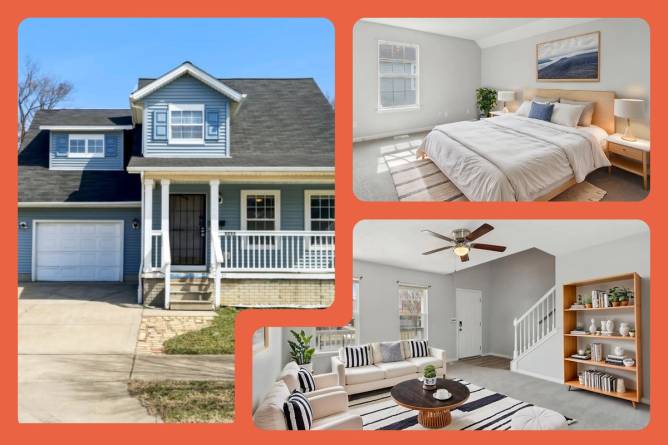 Opendoor Opendoor
Listing 2: 2 bedrooms, 2 baths, 1,214 square feet, in Redford, MI. This suburb 18 miles west of Detroit is considered a safe, family-friendly area with over a dozen playgrounds and parks. 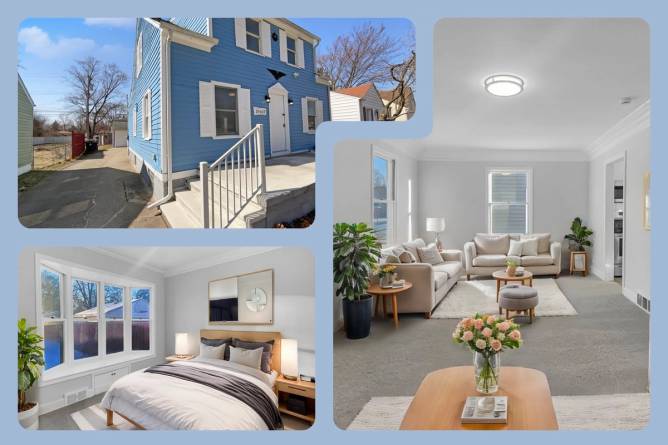 Opendoor Opendoor |
|
|
ANSWER Even though Listing 1 in the Central neighborhood of Cleveland may have more space than Listing 2 the Redford suburb of Detroit, it’s still a tad cheaper at $191,000 versus $195,000. But let’s not split hairs—both are bargains! Despite all that’s been written about Detroit’s comeback, the average home price in Motor City is still a steal at $76,686, up 3.5% since last year. Meanwhile, Cleveland’s average price is higher at $113,400, up 6.5% year-over-year. All in all, both markets are ripe with true-blue deals. |
|
|
|
ADVERTISE // CAREERS // SHOP // FAQ
Update your email preferences or unsubscribe .
View our privacy policy .
Copyright © 2025 Morning Brew Inc. All rights reserved.
22 W 19th St, 4th Floor, New York, NY 10011 |
|