Mortgage rate  6.89% | Med. list price $431,250 | # of listings 29.7% | Time on market 50 days |
| Average weekly 30-year fixed-rate mortgage data from Freddie Mac as of 5/29/2025; median housing data from Realtor.com as of 5/24/2025 and 5/1/2025 (the most recent available). | - Mortgage rates rose to 6.89% this week from 6.86% last week for a 30-year fixed-rate home loan, according to Freddie Mac. At this time last year, rates were at 7.03%.
- Listing prices inched up by 0.2% year over year after a brief stumble downward last week. Currently, the nationwide median hovers at $431,250.
- The number of homes for sale soared by 29.7% year over year, notching 81 straight weeks of expanding options and the most homes on the market since December 2019.
- Homes remain stuck on the market five days longer than this week last year, giving buyers around 50 days to shop around.
|
|
|---|
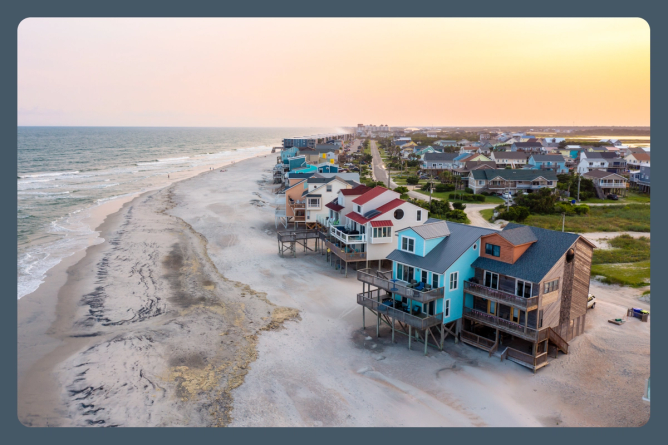
THE BIG STORY Every summer bucket list includes a beach house. But if you hope to graduate from renting a sandy retreat for the week to outright owning a home by the sea, can you afford it? Realtor.com’s affordable beach towns rankings prove you absolutely can—if you know where to look. The very best beach town for bikini-slim budgets is Pascagoula, MS, a Gulf Shore escape where the typical listing will run you a mere $165,610. Not bad, right? In fact, 11 of the 12 picks on the list boast asking prices below the national median of $431,250. - Pascagoula, MS: $165,610
- Deerfield Beach, FL: $211,750
- Atlantic City, NJ: $242,450
- Port Richey, FL: $254,925
- Port Lavaca, TX: $292,000
- Myrtle Beach, SC: $299,000
- Ocean Springs, MS: $302,500
- Corpus Christi, TX: $310,000
- Surfside Beach, SC: $310,925
- Long Beach, WA: $403,188
- Ocean Shores, WA: $409,900
- Ocean City, MD: $454,500
But… buying the house is just the start. Rising insurance and maintenance costs have forced many investors to question whether beach homes are too big a gamble. “Beach homes used to be a cakewalk, but now it’s a whole different ball game,” says Levi Rodgers, a retired Green Beret and real estate broker in San Antonio. “My property on the Gulf went from $3,200 a year for insurance to over $11K, and that’s if you can even get coverage without bizarre exclusions. Throw in new flood zone redeterminations and wild HOA fee hikes, and your profits are wiped out in an instant.” “Honestly, coastal property makes me more nervous than my first million-dollar listing, despite loving beachfront real estate,” agrees Los Angeles real estate agent Wesley Kang. “I’ve seen changes that would shock most investors. Insurance costs broke another record at my Marina del Rey listing yesterday. The owner just got hit with a $68K annual premium, up from $15K last year, while his neighbor two blocks inland pays $7K.” In addition to hurricanes, slow-and-steady beach erosion has caused some homes to simply collapse. “My Malibu client just spent his entire summer rental income on mandatory seawall repairs,” says Kang. “Another had to install $100K worth of water barriers just to keep his insurance.” Is a beach home a good investment? Although owning a beach home isn’t the easy, dreamy investment that perhaps it used to be, some investors still think it’s worth it—with some changes to their strategy. “I haven’t sold yet. I just had to adapt,” says Rodgers. “I cut the rental period down to high-season months, raised rates by 22%, ended low-season bookings, and promoted high-end upgrades to make it work. You have to run it like a hospitality business now, not a passive rental. The ROI is still there, but only if you are actively managing risk, costs, and guest experience. Otherwise, you’re just financing someone else’s vacation.” “Beach properties are now riskier,” agrees Idaho-based real estate investor Daniel Roberts, who has reinvented his approach to stay solvent. “We improved our rental by presenting the property as a luxury destination, adding concierge services with dining, boat tours, and fitness sessions,” he says. “With this rental arrangement, we earned 18% more on rental income last year compared to the previous year. However, our profits have decreased a little since we now pay more each month for maintenance and insurance.” If you’re shopping for a beach house and hoping for a deal, it may pay to search a bit inland for cheaper properties and insurance rates. Elevation is also your friend. “My elevated properties keep attracting loads of cash because people finally understand storm surge math,” says King. Certain oceanfront areas are also experiencing a steep drop in prices—like Florida. “It’s a great time to buy if you’re looking for opportunities as an investor in areas like Florida, which saw a huge run-up of people heading there during the pandemic, but their jobs have required them to return to the office,” says Florida real estate agent Cara Ameer. “If you’re in the market for a vacation property that you can rent out and possibly use as a second home, there are an abundance of choices.” Bottom line: Beach home bargains can still be found as long as you check the fine print, so don’t be afraid to slap on some sunscreen and shop around. | | |
|
|
Presented by Bisnow Get Bisnow’s The First Draft for a free, daily read on what’s going on right now in commercial real estate, why it matters, and how to use it to your advantage. While most industry newsletters read like SEC filings, The First Draft doesn’t. Bisnow breaks down the stories you need to know and gives you smart, intriguing takes to help you win the day. Subscribe for free to The First Draft from Bisnow and join hundreds of thousands of investors, developers, and dealmakers who start their day in the know. |
|
QUICK HITS  Apartment-hunting season is about to peak. The first week of June typically marks the busiest time of the year for rentals based on Zillow traffic activity and rental applications. Plus, renter households are now at a record high and rising, so the search is more cutthroat than usual. Listings that offered perks like one month’s free rent dropped from 40% in March to under 35% in April as landlords realized they hold the cards. Apartment-hunting season is about to peak. The first week of June typically marks the busiest time of the year for rentals based on Zillow traffic activity and rental applications. Plus, renter households are now at a record high and rising, so the search is more cutthroat than usual. Listings that offered perks like one month’s free rent dropped from 40% in March to under 35% in April as landlords realized they hold the cards.
 They’ve graduated. Now what? Realtor.com’s best cities for college grads offer plenty of ideas on where to move, based on ample entry-level job opportunities plus affordable rentals. The top city? Austin, TX, where the median rent of $1,504 per month eats up just 18.9% of the typical income, leaving plenty of cash left over for pub crawls and 2am pizza. They’ve graduated. Now what? Realtor.com’s best cities for college grads offer plenty of ideas on where to move, based on ample entry-level job opportunities plus affordable rentals. The top city? Austin, TX, where the median rent of $1,504 per month eats up just 18.9% of the typical income, leaving plenty of cash left over for pub crawls and 2am pizza.
 Summer vacation is off to a slow start. Summer rental bookings have been sluggish, with occupancy and average daily rates down from this time last year, according to short-term rental data site Beyond. Renters are also waiting longer to book, averaging just 26 days in advance—a 12% decrease year over year. But occupancy and revenue for the July Fourth weekend look promising, so it may just be a matter of time before the short-term rental market gets going at full steam. Summer vacation is off to a slow start. Summer rental bookings have been sluggish, with occupancy and average daily rates down from this time last year, according to short-term rental data site Beyond. Renters are also waiting longer to book, averaging just 26 days in advance—a 12% decrease year over year. But occupancy and revenue for the July Fourth weekend look promising, so it may just be a matter of time before the short-term rental market gets going at full steam.
 Real estate prices are still rising. Even though the housing market is moving at its slowest pace in years, national home prices rose 3.4% in March compared to a year ago, according to S&P CoreLogic Case-Shiller. This index, which is watched closely since it’s designed to eliminate distortions based on size or types of homes sold, shows prices are at last down from the 4% price gain seen the previous month. But it’s clear that homebuyers still face a grueling and expensive uphill battle. Real estate prices are still rising. Even though the housing market is moving at its slowest pace in years, national home prices rose 3.4% in March compared to a year ago, according to S&P CoreLogic Case-Shiller. This index, which is watched closely since it’s designed to eliminate distortions based on size or types of homes sold, shows prices are at last down from the 4% price gain seen the previous month. But it’s clear that homebuyers still face a grueling and expensive uphill battle.
 Starter homes are shrinking. Since 2017, the median home size has been trending smaller, but prices have not followed, according to data firm Cotality. Why? Because building costs have risen year over year by double-digit percentages. As a result, the income required to buy even a modest “starter home” has risen from $49,008 in 2020 to $101,376 in 2024, according to a National Association of Realtors analysis. Starter homes are shrinking. Since 2017, the median home size has been trending smaller, but prices have not followed, according to data firm Cotality. Why? Because building costs have risen year over year by double-digit percentages. As a result, the income required to buy even a modest “starter home” has risen from $49,008 in 2020 to $101,376 in 2024, according to a National Association of Realtors analysis.
 A recession won’t stop most homebuyers. A survey by Realtor.com found that although 15.8% of buyers would be less likely to buy a home if a recession hits, about 30% say a recession would make them even more likely to purchase property. Over half said it would have no impact at all on their homebuying plans. A recession won’t stop most homebuyers. A survey by Realtor.com found that although 15.8% of buyers would be less likely to buy a home if a recession hits, about 30% say a recession would make them even more likely to purchase property. Over half said it would have no impact at all on their homebuying plans.
|
|
|
Together with Bisnow Stay ahead. Subscribe to The First Draft—Bisnow’s free daily read on what’s happening now in commercial real estate. No filler. Just smart takes and a unique perspective on what matters most. You need to stay smart to win. Get The First Draft and make sure you stay ahead. |
|
REAL TALK When Shannon Moore turned 50, she got divorced, sold her house, and funneled her $2 million in life savings and real estate investments into an abandoned campground in Hayesville, NC. On these wooded 11.55 acres, she built Magical Mountain Resorts, a whimsical village of tiny cottages inspired by Snow White, Alice in Wonderland, and other storytime characters. Here’s what inspired this epic adventure and how she put it together. What inspired you to create this unique campground of tiny homes? “I owned a real estate brokerage in my home state of Florida. When I turned 50, I sold everything I owned, got divorced, and bought this campground. I saw the ‘for sale by owner’ listing on Zillow. I had never been to Hayesville before, but after seeing the listing, I flew up the next day. A fellow real estate investor flew up with me and said the property was so dilapidated that he wouldn’t offer on it. He felt it needed too much work. [Nonetheless,] I put in a full-price offer.” How much did you spend to purchase it? “I spent $290,000 on 11.55 acres, five tiny homes, a large house, and a pavilion. I brought in an additional tiny home and two double-decker buses. The homes were barely standing, and all the utilities and roads needed renovating, but I took a chance because I had a vision. I wanted an enchanting village with fairy gardens, mushroom statues with polka dots, and twinkling lights in the trees.” How much did it cost to renovate this camp and bring your vision to life? “I did go quite over budget, at around $2 million spent so far. I paid cash from selling my home and investments in Florida. I also downsized my living a lot. I went from a home on the beach in Florida worth around $650K to a vintage flamingo-themed trailer worth $10,000. If I were going to make this work, I had to make sacrifices.” How did this investment pan out? “I just started my third year open on March 23, 2025. I’m still building the campground out, so I put any profit right back into the project.” What did you learn from this experience, and what advice do you have for others who want to take a chance building their own real estate dream from scratch? “I learned to follow your dreams and not wait. I would also advise being on-site while big projects are happening. I lost a lot of money and had to redo a lot of things that I wouldn’t have had to redo had I been close by.” Click here to learn more about Shannon’s magical escape and see more pics—including Walt Disney’s old bus. | | |
|
|
LINGO Everyone’s been buzzing lately about how real estate has been turning into more of a “buyer’s market.” But what does that mean, exactly? In a nutshell, it means there are more properties for sale than there are homebuyers willing to purchase them, which gives buyers the upper hand. Granted, most homebuyers out there today may not feel all that powerful since they’re also cowed by high mortgage rates. Still, in terms of wheeling and dealing, buyers are certainly in a better position now than they were during the pandemic, when a strong seller’s market reigned. Back then, mortgage rates were below 4%, and making a purchase was tough in a whole different way: Open houses were packed like a hot new nightclub. Bidding wars pushed prices hundreds of thousands over asking. Today, however, the party’s over for sellers, who must now bend over backward to entice buyers to bite, offering price cuts and other concessions. Although the overall US housing market is turning more buyer-friendly, it varies a lot by area. Southern states like Florida and Texas are largely buyer’s markets, but much of the Northeast and Midwest remain seller’s markets. Here are some maps that highlight where it’s a buyer’s or seller’s market—and how to tell if you’re in one or the other. |
|
|
QUIZ Looking for land…lots and lots of land? These two Wyoming ranches offer plenty of room to stretch your legs, but one costs a prettier penny. Test your real estate savvy by picking which listing is pricier, then find out the answer below. Listing #1: 190 acres, Kelly, WY. Just 25 miles from Jackson Hole, Red Hills Ranch was once owned by not just one, but two US senators. The property boasts a main lodge, an owner’s residence, and three riverside cabins where people can kick back and enjoy every outdoor activity under the sun, from horseback riding to fly-fishing to a simple dip in the heated pool. 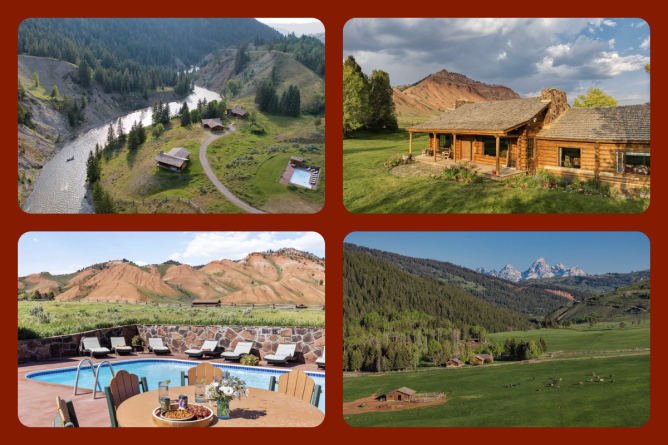 Latham Jenkins Latham Jenkins Listing #2: 16,532 deeded acres, Meeteetse, WY. Antlers Ranch has been called “Little Yellowstone” because of its 330 species of wildlife, including grizzly bears, gray wolves, moose, and around 700 bison, which were once nearly driven to extinction but have been returned to repopulate the land they once roamed. Within this wild expanse, sit two primary houses, plus three smaller homes for guests or staff, along with a butcher shop, hay sheds, grain bins, and a Quonset hut. The land comes with a variety of income streams, including livestock, hay, minerals, travel, fishing, and limited hunting.  Latham Jenkins Latham Jenkins |
|
|
ANSWER Hold onto your cowboy hats: Listing #1, in Kelly, will run you $65 million, but Listing #2, in Meeteetse, will set you back $85 million. Their sheer size serves to justify these prices, and though few mere mortals can afford them, it’s fun to check out just how rich ranch life can be. |
|
|
|
ADVERTISE // CAREERS // SHOP // FAQ
Update your email preferences or unsubscribe .
View our privacy policy .
Copyright © 2025 Morning Brew Inc. All rights reserved.
22 W 19th St, 4th Floor, New York, NY 10011 |
|